
Self-Awareness: The Life-Changing Skill That Powers Every Successful Life

Home Self-Awareness: The Life-Changing Skill That Powers Every Successful Life Many people chase success through external tools. They read books, follow strategies, and adopt new habits. Yet a deeper skill often determines whether those tools actually work. That skill is self-awareness. Self-awareness shapes how you think, decide, and grow. Because of this, it influences every result you experience in life. However, most people overlook it. They focus on productivity before understanding themselves. They chase goals before understanding their motivations. As a result, progress often feels confusing. Fortunately, developing self-awareness changes everything. Once you understand how your mind works, you gain the power to shape your life intentionally. What Self-Awareness Really Means Many people misunderstand self-awareness. Some assume it means overthinking. Others believe it requires constant self-analysis. However, true self-awareness is simpler. Self-awareness means clearly understanding your thoughts, emotions, behaviors, and motivations. You notice how you react to situations. You also recognize the patterns behind those reactions. Because of this clarity, you make better decisions. Instead of acting on impulse, you respond with intention. This ability becomes the foundation of personal growth. Why Self-Awareness Powers Every Successful Life Success rarely happens by accident. Instead, successful individuals understand themselves deeply. They know their strengths. They also recognize their weaknesses. Therefore, they make smarter choices. For example, they choose careers that match their abilities. They also build habits that support their natural strengths. At the same time, they manage their limitations. Because of this awareness, they improve faster. Self-awareness removes guesswork. It also strengthens personal direction. As a result, success becomes more intentional. The Link Between Self-Awareness and Personal Growth Personal growth requires change. However, meaningful change begins with understanding. This is where self-awareness becomes powerful. When you observe your thoughts and actions, you start to notice patterns. Some patterns support success. Others create hidden obstacles. For instance, you may notice procrastination before important tasks. You might also recognize emotional reactions that slow progress. Once you see these patterns clearly, you can change them. Therefore, self-awareness becomes the first step toward real improvement. Internal Self-Awareness vs External Self-Awareness Psychologists often describe two forms of self-awareness. The first type is internal self-awareness. This involves understanding your values, beliefs, and motivations. You recognize what truly drives your behavior. Because of this insight, your decisions become clearer. The second type is external self-awareness. This means understanding how others perceive you. You become aware of how your words, actions, and attitude affect people around you. When both forms develop together, relationships improve. Additionally, leadership skills grow stronger. How Self-Awareness Improves Decision Making Every day, people make hundreds of decisions. Some choices shape careers, finances, and relationships. Without self-awareness, these decisions often rely on emotion or habit. However, self-aware individuals pause before reacting. They ask deeper questions. Why do I want this outcome? What emotions influence my thinking? What result will truly benefit me long term? Because of this reflection, decisions become wiser. Over time, better decisions create better results. The Role of Self-Awareness in Emotional Intelligence Emotions influence behavior more than most people realize. However, many individuals struggle to manage emotions effectively. This challenge often comes from low self-awareness. When you understand your emotional triggers, you gain control over them. For example, you may notice frustration rising during conflict. Instead of reacting immediately, you pause. Then you respond calmly. This ability strengthens emotional intelligence. As a result, relationships become healthier and more productive. Self-Awareness and Confidence Many people believe confidence comes from success. However, real confidence often begins with self-awareness. When you understand your strengths, you trust your abilities. You also recognize areas where growth is needed. This balanced perspective creates stable confidence. You no longer depend on constant approval. Instead, your confidence grows from self-understanding. Because of this, challenges feel less threatening. You trust your ability to learn and improve. Why Lack of Self-Awareness Creates Hidden Problems A lack of self-awareness creates many invisible obstacles. First, people repeat the same mistakes. They fail to notice the habits that cause problems. Second, relationships suffer. Without awareness, individuals misunderstand how their behavior affects others. Finally, personal growth slows. If you cannot identify weaknesses, improvement becomes difficult. Because of these reasons, many talented individuals struggle. Their skills remain strong, yet their awareness stays limited. Therefore, progress stalls. Practical Ways to Build Self-Awareness Fortunately, self-awareness can grow through simple practices. Small habits often produce powerful results. 1. Practice Daily Reflection Spend a few minutes reviewing your day. Ask what went well. Also ask what could improve. This habit builds awareness gradually. Over time, patterns become clear. 2. Pay Attention to Emotional Triggers Notice situations that create strong emotions. Anger, frustration, or anxiety often reveal deeper beliefs. Understanding these triggers improves emotional control. 3. Ask for Honest Feedback Other people often see behaviors we miss. Therefore, ask trusted friends or colleagues for feedback. Listen carefully without defensiveness. This insight strengthens external self-awareness. 4. Observe Your Habits Habits shape most daily actions. However, many habits operate automatically. Pause occasionally to observe them. Identify which habits support growth and which one’s limit progress. 5. Write Your Thoughts Journaling helps organize thinking. When you write thoughts clearly, hidden beliefs often appear. This clarity deepens understanding. How Self-Awareness Strengthens Leadership Great leaders often share one powerful trait. They understand themselves deeply. Because of strong self-awareness, they manage emotions effectively. They also understand how their actions influence others. As a result, they build trust. Self-aware leaders also accept feedback easily. They adjust strategies when needed. This flexibility strengthens teams and organizations. Therefore, leadership and self-awareness often grow together. Self-Awareness and Purpose Many people search for purpose in life. However, purpose rarely appears suddenly. Instead, it grows through self-awareness. When you understand your values, interests, and strengths, direction becomes clearer. You begin to notice activities that feel meaningful. At the same time, you recognize work that drains energy. This knowledge helps guide life choices. Gradually, purpose begins to form. The Daily Habit That Expands Self-Awareness Growth does not require dramatic change. Instead, small daily habits build
Fixed vs Growth Mindset? Find Out the Subtle Mental Shift That Unlocks Your Best Self
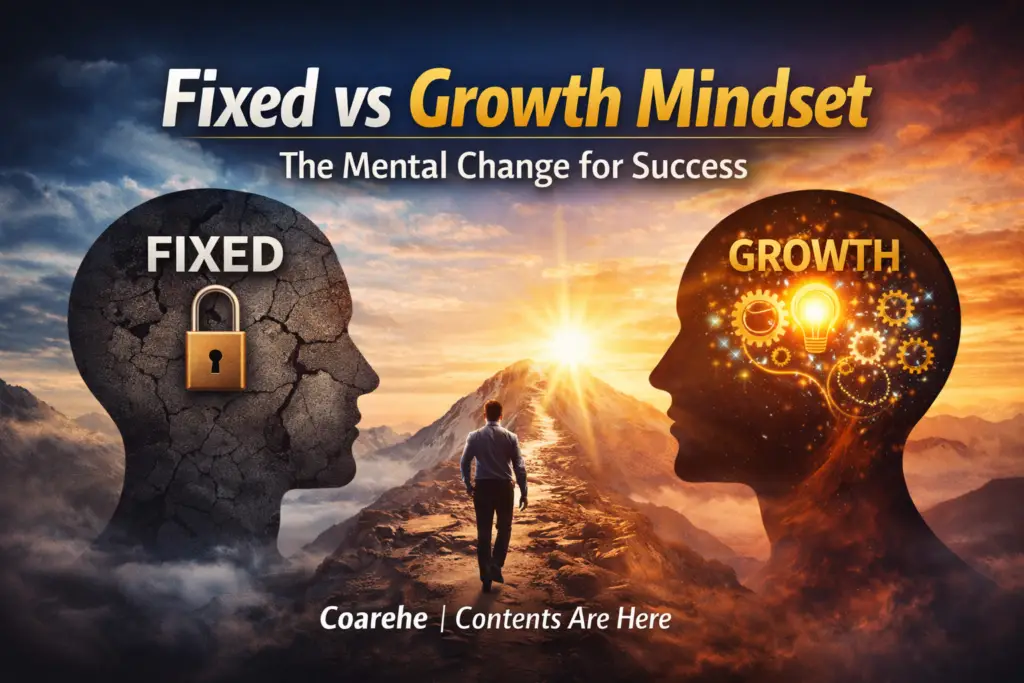
Home Fixed vs Growth Mindset? Find Out the Subtle Mental Shift That Unlocks Your Best Self Success rarely starts with talent. Instead, it begins with how you think about talent. Many people search for better habits, stronger motivation, or smarter strategies. However, the true breakthrough often begins deeper in the mind. This is where the concept of fixed vs growth mindset becomes powerful. Your mindset shapes how you handle failure, learning, and progress. As a result, it influences nearly every area of life. Careers rise or fall on this silent belief system. Relationships improve or weaken because of it. Even personal confidence grows or shrinks under its influence. Therefore, understanding the difference between a fixed mindset and a growth mindset can transform how you approach your life. More importantly, the shift between the two is often subtle. Yet that small shift can unlock your best self. Understanding Fixed vs Growth Mindset Before we explore transformation, we must first understand the core idea behind fixed vs growth mindset. A fixed mindset believes abilities remain static. People with this mindset think intelligence, creativity, and talent stay mostly the same throughout life. Because of that belief, they often avoid challenges. They fear mistakes. Failure feels like proof of weakness. As a result, they prefer safe situations where success seems guaranteed. However, this approach creates hidden limits. A growth mindset operates differently. It treats ability as something that can expand through learning, practice, and persistence. Challenges become opportunities. Effort becomes valuable. Mistakes become feedback rather than failure. Consequently, people with a growth mindset improve faster and achieve more over time. The difference between these two ways of thinking appears small. Yet the results can reshape an entire life. Why the Fixed Mindset Feels Comfortable but Limits Growth Many people fall into a fixed mindset without realizing it. First, society often rewards quick success. People celebrate natural talent more than consistent effort. Because of this, many individuals begin to fear situations where they might struggle. Next, fixed thinking protects the ego. If someone believes ability cannot change, then failure does not require growth. Instead, they can simply avoid difficult situations. While that feels safe, it creates long-term problems. Avoiding challenges stops learning. Over time, skills stagnate. Confidence becomes fragile because success must always feel easy. Therefore, a fixed mindset quietly limits potential. Meanwhile, the world continues to reward those who adapt and grow. The Power of a Growth Mindset in Personal Development A growth mindset changes how people interpret difficulty. Instead of asking, “Am I good at this?” growth thinkers ask, “How can I improve at this?” That small change reshapes behavior. People with a growth mindset practice longer. They learn from mistakes. They seek feedback and adjust their approach. As a result, progress accelerates. This pattern appears across many fields. Entrepreneurs refine ideas through trial and error. Athletes improve through repeated training. Creators sharpen skills through constant experimentation. The principle stays the same. Growth happens when effort meets learning. Because of this, a growth mindset becomes the foundation of strong personal development. The Subtle Mental Shift That Changes Everything The difference between fixed vs growth mindset often comes down to a single belief. Do you see ability as a limit, or do you see it as a starting point? This subtle mental shift transforms how people interpret life events. For example, imagine someone struggling with a new skill. A fixed mindset might say: “I am not naturally good at this.” A growth mindset responds differently: “I am not good at this yet.” The word yet changes everything. It keeps the door open to improvement. It also creates psychological momentum. Because once people believe progress is possible, they begin to act differently. And actions create results. How Fixed vs Growth Mindset Shapes Everyday Decisions Mindset does not only appear during big life moments. Instead, it shows up in small daily decisions. Consider learning a new skill. A fixed mindset may stop after early difficulty. Meanwhile, a growth mindset continues practicing. Think about receiving criticism. A fixed mindset hears rejection. However, a growth mindset hears guidance. Even goal setting changes. People with fixed beliefs often set goals that protect their image. In contrast, growth-oriented individuals set goals that challenge their limits. Over time, these small decisions compound. Eventually, they build two completely different life paths. Signs You Might Be Stuck in a Fixed Mindset Many people carry fixed thinking habits without awareness. However, certain patterns often reveal the mindset. First, you may avoid challenges that risk failure. Next, criticism may feel deeply personal. You might also compare your ability to others often. Finally, mistakes may cause discouragement rather than curiosity. These patterns do not mean something is wrong. Instead, they signal an opportunity to grow. Awareness always becomes the first step toward change. Practical Ways to Build a Growth Mindset The transition from fixed vs growth mindset does not require dramatic life changes. Instead, it begins with simple mental habits. 1. Reframe Challenges View challenges as training opportunities. Athletes grow stronger through resistance. Likewise, the mind grows through difficulty. Therefore, when something feels hard, treat it as a signal for growth. 2. Replace Judgment with Curiosity Instead of judging mistakes, analyze them. Ask what went wrong. Then adjust your strategy. Curiosity fuels learning. Judgment blocks it. 3. Focus on Progress Perfection slows growth. Instead, track improvement. Small gains accumulate over time. As progress becomes visible, motivation rises naturally. 4. Embrace the Power of “Yet” Language shapes belief. When something feels impossible, add the word yet to the sentence. This simple habit keeps the growth door open. 5. Surround Yourself with Growth Thinkers Environment influences mindset. Spend time with people who value learning, effort, and improvement. Their perspective strengthens your own. Why the Growth Mindset Creates Long-Term Success Success rarely arrives instantly. Instead, it grows through repeated improvement. A growth mindset supports this process because it encourages persistence. When setbacks appear, growth thinkers adapt rather than quit. They refine strategies. They learn new skills. They continue
How Your Daily Habits Secretly Drive 90% of Your Success — Unlock Their Transformational Power

Home How Your Daily Habits Secretly Drive 90% of Your Success — Unlock Their Transformational Power Daily habits and success move together. They form a hidden partnership. Success rarely explodes into your life overnight.Instead, it grows in silence. In fact, your daily habits quietly guide most of your actions.Therefore, they shape most of your results. You may think big decisions define your future.However, small, repeated actions often matter more. That is the real power of daily habits and success.They work whether you notice them or not. So if you want better results, start with better routines.Because what you repeat, you become. The Invisible System Behind Daily Habits and Success Every day, you wake up and follow patterns.You brush your teeth without thinking.You check your phone almost on autopilot.Then you move through your morning in a familiar way.These patterns form your habit loops.And those loops quietly control most of your day. Researchers like Charles Duhigg explain this clearly.He shows that habits run on cue, routine, and reward.First, a trigger appears.Next, you act. Finally, your brain receives a reward.Then the loop strengthens.Over time, the behavior becomes automatic.As a result, you spend less energy deciding.This saves mental power.However, it also locks in patterns. Therefore, daily habits and success stay deeply connected.Because automatic actions create automatic outcomes. Why 90% of Your Results Come From Repetition You do not rise to the level of your goals.Instead, you fall to the level of your systems.That idea echoes through the work of James Clear.He argues that small habits compound like interest.One healthy meal changes little.Yet consistent nutrition changes everything.One focused work session feels minor.But daily focus builds mastery.This is the compounding effect.And it drives daily habits and success.Moreover, repetition builds identity.You become what you repeatedly do.If you write each day, you become a writer.If you train each day, you become disciplined.Therefore, habits do more than shape behavior.They shape belief.And belief fuels action.Then action reinforces belief.This loop explains why daily habits and success feel inseparable.Because habits create identity, and identity sustains success. The Emotional Power Hidden in Small Daily Habits Habits do not just influence results.They shape emotions.For example, a short morning routine builds calm.In contrast, chaotic mornings create stress.Likewise, five minutes of gratitude shifts your mood.Meanwhile, constant scrolling feeds anxiety.Therefore, daily habits and success also connect through emotional control.Because emotional stability improves decision making.When you feel clear, you act wisely.Then wise actions produce better outcomes.Furthermore, strong habits reduce friction.You no longer debate simple choices.As a result, you save willpower.And saved willpower boosts productivity.This emotional leverage feels subtle.Yet it transforms performance. The Science of Automatic Success Your brain loves efficiency.So it automates repeated actions.Neuroscientists describe this shift toward the basal ganglia.That region stores routines.Although the process feels invisible, it proves powerful.Because automation frees mental space.When good habits run automatically, progress accelerates.However, when bad habits run automatically, damage spreads.Therefore, daily habits and success depend on awareness.You must choose which patterns to automate.Moreover, small wins release dopamine.That chemical rewards progress.Consequently, your brain craves repetition.And repetition strengthens behavior.This explains why consistency beats intensity.Because daily action wires lasting change. How Bad Daily Habits Quietly Block Success Not all habits help you grow. Some quietly hold you back.For instance, constant distractions break deep focus.Then unfinished tasks pile up.Likewise, late nights reduce energy.Soon productivity declines.These patterns may seem harmless.Yet they shape your long-term results.Therefore, daily habits and success also depend on elimination.You must remove what weakens you.First, identify your triggers.Next, replace harmful routines.Instead of scrolling at night, read ten pages.Instead of complaining, write solutions.Small swaps create big shifts.And big shifts build momentum. The Identity Shift That Changes Everything Lasting success begins inside.It starts with identity.You do not build habits to achieve goals.Rather, you build habits to become someone new.For example, say, “I am becoming disciplined.”Then act like it.Each small habit casts a vote.And each vote strengthens your new identity.Over time, identity drives behavior.Then behavior produces results.Thus, daily habits and success rest on self-image.Because who you believe you are determines what you do.If you see yourself as capable, you act boldly.Consequently, bold action creates progress. A Simple Framework to Master Daily Habits and Success You do not need complex systems.Instead, you need clarity.Start small.Then stay consistent.First, choose one keystone habit.This habit should influence many areas.For example, daily exercise boosts energy.It also improves focus.Next, attach it to an existing routine.This reduces resistance.Then track your progress.Because what gets measured improves.After that, reward small wins.Celebration strengthens commitment.Finally, protect your environment.Design it for success.Remove distractions.Add helpful cues.Through this process, daily habits and success align naturally.Because structure supports growth. The Compounding Effect Over Time Growth rarely feels dramatic.At first, progress appears slow.However, consistency builds pressure.Then results multiply.Think of compound interest.Small deposits grow large.Similarly, small habits accumulate power.Eventually, they create breakthroughs.Many successful leaders rely on routines.They trust repetition.Although the world praises talent, discipline wins long term.Because discipline sustains effort.Therefore, daily habits and success form a long game.Patience becomes your advantage. How to Rewire Your Daily Habits for Breakthrough Results Change begins with awareness.Notice your patterns.Track your day for one week.Then highlight repeated actions.Ask yourself simple questions.Which habits serve my goals?Next, remove one negative trigger.Then install one positive routine.Keep changes small.Because small feels manageable.Additionally, focus on consistency over perfection.Miss once, then restart.Momentum matters more than intensity.And persistence beats motivation.As you rewire daily habits and success, confidence grows.Then growth feels natural. The Leadership Advantage of Strong Habits High performers guard their routines.They protect their mornings.They plan their priorities.And they review their days.This discipline creates clarity.Clarity fuels execution.Moreover, strong habits inspire others.Consistency builds trust.If you lead a team, model stability.Because people follow patterns.Thus, daily habits and success also drive influence.Your routines shape your impact. The Transformational Power Within Your Reach You do not need extreme effort.You need steady action.You do not need perfect timing.You need daily discipline.Success hides inside repeated behaviors.And those behaviors live in your control.Therefore, examine your routines today.Choose one powerful change.Commit to it for thirty days.Then observe the shift.Over time, your identity will evolve.And your results will follow.Daily habits and success will no longer feel mysterious.Instead, they will feel intentional.That
How to Reclaim Your Focus and Thrive in a World Designed to Steal Your Attention

Home How to Reclaim Your Focus and Thrive in a World Designed to Steal Your Attention Attention has become a battleground. Every app wants it. Every platform fight for it. Every notification demands it. As a result, your focus feels fragile. However, you are not weak. You simply live in a system built to distract you. Therefore, learning to reclaim your focus is not optional. It is survival. More importantly, it is the key to thriving. Focus builds skill. Focus builds wealth. Focus builds meaning. Without it, potential fades. Yet with it, progress accelerates. So let us explore how to reclaim your focus and thrive in a world designed to steal your attention. Why the Modern World Attacks Your Attention Technology moves fast. However, your brain evolved slowly. That mismatch creates tension. Social media platforms use bright colors. They use endless scrolling. They use variable rewards. Consequently, your brain releases dopamine. You crave more stimulation. Meanwhile, deep work feels dull. Emails interrupt you. Messages pop up. News alerts flash constantly. Therefore, your mind jumps from task to task. This pattern weakens focus. Moreover, it trains distraction. Over time, shallow thinking replaces deep thought. However, awareness changes everything. Once you understand the system, you regain control. And once you regain control, you can reclaim your focus fully. The Real Cost of Lost Focus Distraction looks harmless. Yet it drains energy. First, it reduces productivity. Second, it increases stress. Third, it lowers creativity. Furthermore, constant switching exhausts your brain. You feel busy. However, you achieve little. This gap creates frustration. Frustration then fuels self-doubt. Eventually, confidence drops. Therefore, the cost goes beyond time. It touches identity. When you fail to reclaim your focus, you slowly lose trust in yourself. However, the reverse also holds true. When you master attention, self-trust grows. And with self-trust, growth becomes easier. Reclaim Your Focus by Rewiring Your Environment Willpower alone will fail you. Environment shapes behavior faster than motivation. Therefore, change your surroundings first. Turn off non-essential notifications. Move distracting apps off your home screen. Create a clean workspace. Use website blockers during deep work sessions. In addition, set clear work hours. Then protect them fiercely. Small changes create strong results. As a result, you reduce decision fatigue. Moreover, you remove temptation before it appears. When you design your space wisely, you reclaim your focus with less effort. Build Deep Work as a Daily Ritual Focus grows with practice. However, practice requires structure. Schedule deep work daily. Start with 30 minutes. Then extend gradually. During that time, eliminate all distractions. Silence your phone. Close unused tabs. Set a clear goal. Work on one task only. At first, discomfort will rise. However, stay with it. Your brain will resist silence. Yet over time, it will adapt. Deep work strengthens neural pathways. Consequently, concentration improves. When you repeat this ritual, you reclaim your focus consistently. Master the Art of Single-Tasking Multitasking feels productive. In reality, it fragments attention. Each switch costs mental energy. Therefore, choose one priority per session. Define it clearly. Write it down. Then commit fully. If new ideas appear, note them quickly. However, return to the main task immediately. This discipline builds momentum. Momentum builds confidence. Confidence fuels consistency. Eventually, single-tasking becomes natural. As a result, you thrive even in chaotic environments. Strengthen Your Mind Through Digital Boundaries Digital tools are powerful. However, without limits, they dominate you. Set screen-free hours daily. For example, avoid devices one hour after waking. Likewise, avoid them one hour before sleep. These boundaries calm your mind. They also improve sleep quality. Better sleep sharpens focus. Moreover, take weekly digital detox periods. Spend time outdoors. Read physical books. Engage in real conversations. Although it feels uncomfortable at first, clarity soon returns. When you control technology, you reclaim your focus fully. Train Your Brain with Mindfulness Mindfulness strengthens attention. It teaches awareness. It reduces impulsive reactions. Start with five minutes daily. Sit quietly. Focus on your breath. When your mind wanders, gently return. Do not judge yourself. Instead, observe calmly. This simple act rewires your brain. Research supports this. Mindfulness increases gray matter in attention centers. Therefore, it improves concentration over time. As you practice, distractions lose power. And gradually, you reclaim your focus from within. Fuel Your Body to Protect Your Focus Your brain needs energy. Poor sleep weakens attention. Therefore, protect your rest. Aim for seven to eight hours nightly. Additionally, hydrate often. Eat whole foods. Reduce excessive sugar. Exercise regularly. Even short walks improve mental clarity. Movement increases blood flow to the brain. Consequently, thinking sharpens. When you care for your body, you support your mind. And when your mind feels strong, focus follows naturally. Set Clear Goals to Direct Your Attention Focus needs direction. Without goals, attention drifts. Therefore, define clear outcomes. Write them down weekly. Break them into daily actions. Review them each morning. This habit anchors your energy. Moreover, it prevents reactive behavior. Instead of chasing notifications, you pursue purpose. Purpose organizes your day. Clarity reduces distraction. As a result, you reclaim your focus through intentional planning. Thrive by Aligning Focus with Meaning Focus becomes powerful when tied to purpose. Ask yourself why your work matters. Connect tasks to long-term vision. Visualize the outcome. Feel the reward in advance. Emotion strengthens commitment. Commitment sustains effort. Therefore, do not chase productivity alone. Chase meaningful progress. When you align attention with identity, distractions lose appeal. You no longer seek constant stimulation. Instead, you seek progress. That shift changes everything. Reclaim Your Focus in Social Settings People also demand attention. However, you can manage this wisely. Communicate your priorities clearly. Explain your focus hours. Set expectations early. Most people respect clarity. Additionally, schedule response times. Reply to messages in batches. Avoid constant checking. This habit protects mental energy. Furthermore, it trains others to respect your boundaries. As you practice this consistently, you reclaim your focus without harming relationships. Overcome Mental Resistance Sometimes distraction hides deeper fear. You may avoid hard tasks. You may fear failure. Therefore, you
How Powerful Inner Strength Is Cultivated and Strengthened Over Time

Home How Powerful Inner Strength Is Cultivated and Strengthened Over Time Powerful Inner strength does not appear overnight. Instead, it grows quietly through daily choices. Many people search for quick confidence hacks. However, real powerful inner strength develops through steady action and clear intention. You build it when you face pressure. You deepen it when you recover from setbacks. Over time, you shape a mind that stays calm, focused, and firm. That is the foundation of true personal development. And that is where lasting self help begins. Understanding Powerful Inner Strength in Personal Development Powerful inner strength means emotional stability, mental clarity, and steady self-belief. It allows you to stay grounded during stress. It also helps you act with courage when fear appears. Unlike motivation, inner strength does not fade quickly. Instead, it becomes stronger through practice. For example, researchers like Angela Duckworth highlight the value of grit. Grit combines passion with persistence. Therefore, it supports long-term growth. Similarly, Carol Dweck explains the power of a growth mindset. When you believe you can improve, you act differently. As a result, you train your mind to endure challenges. Powerful inner strength grows from these patterns. Consequently, personal development becomes a daily discipline, not a random event. Why Inner Strength Must Be Cultivated Over Time You cannot rush deep character. Likewise, you cannot rush resilience. Inner strength grows like a muscle. First, you stress it. Then, you allow recovery. After that, you repeat the process. Over time, capacity increases. However, many people quit too early. They expect instant results. Yet growth follows a compounding curve. Small efforts today create large gains later. For instance, one honest conversation builds courage. Then another builds confidence. Eventually, difficult discussions feel normal. Therefore, powerful inner strength forms layer by layer. And each layer reinforces the next. The Daily Habits That Strengthen Powerful Inner Strength Habits shape your mental structure. In fact, research from Atomic Habits by James Clear shows how small actions create identity change. When you act brave, you become braver. When you stay disciplined, you become disciplined. Therefore, habits build inner strength faster than inspiration. Start with morning clarity. Wake up with purpose. Avoid your phone for the first 20 minutes. Instead, breathe deeply and plan your day. Next, practice controlled discomfort. Take cold showers. Speak up in meetings. Finish hard tasks first. These small acts train courage. Moreover, they build self-trust. And self-trust fuels powerful inner strength. Consistency matters more than intensity. Even five minutes daily can shift your mindset. Thus, steady effort compounds into lasting power. Emotional Mastery: The Core of Powerful Inner Strength Emotional control separates fragile confidence from real strength. You cannot prevent emotions. However, you can guide your response. For example, pause before reacting. Take one slow breath. Name the emotion. Then choose your action. This simple pause builds enormous power. Over time, you gain control of impulses. As a result, people trust your presence. Moreover, you trust yourself. Inner strength thrives on emotional maturity. Therefore, journaling helps. Writing clarifies thoughts. Clarity reduces anxiety. And reduced anxiety increases bold action. Likewise, gratitude strengthens emotional stability. Grateful people recover faster. They focus on growth instead of loss. Consequently, they cultivate powerful inner strength through perspective. Resilience and Recovery: Strength Through Adversity Challenges shape mental endurance. Comfort rarely builds depth. When setbacks occur, you face two choices. You can shrink. Or you can adapt. Resilience grows through adaptation. For example, athletes like Serena Williams demonstrate mental endurance. She faced injuries and criticism. Nevertheless, she returned stronger. That pattern defines resilience. You fall. Then you learn. After that, you rise wiser. Therefore, setbacks become teachers. Each recovery strengthens belief. Each lesson sharpens focus. Over time, adversity becomes fuel. And powerful inner strength becomes your default state. The Role of Discipline in Building Powerful Inner Strength Motivation starts the journey. However, discipline sustains it. You will not always feel confident. Yet you can still act with integrity. That choice builds power. For instance, set clear standards. Honor your commitments. Arrive on time. Finish what you start. These actions may seem small. Still, they reinforce self-respect. Self-respect strengthens identity. And identity shapes destiny. Therefore, discipline forms the backbone of personal development. It trains consistency. Consistency builds trust. Trust strengthens inner resolve. As a result, powerful inner strength becomes stable and reliable. Environment and Influence: Guarding Your Mental Space Your environment shapes your thoughts. Therefore, choose it wisely. Spend time with growth-minded people. Limit exposure to negativity. Reduce digital noise. Likewise, curate your inputs carefully. Read uplifting books. Listen to thoughtful podcasts. Study wise mentors. For example, Stephen Covey emphasizes proactive living. Proactive people control responses. They do not blame circumstances. Consequently, they strengthen their inner core. When you guard your environment, you protect your focus. Protected focus builds clarity. Clarity strengthens decision-making. And strong decisions cultivate powerful inner strength. Self-Belief: The Silent Multiplier Self-belief multiplies every effort. Without it, skills shrink. With it, potential expands. However, self-belief grows through proof. You must keep promises to yourself. For example, commit to daily exercise. Complete it even when tired. That action builds credibility with yourself. Gradually, confidence rises. As confidence rises, courage increases. Then bigger goals feel reachable. Therefore, powerful inner strength grows through repeated self-trust. It does not depend on applause. Instead, it depends on integrity. Integrity anchors confidence. And anchored confidence endures pressure. Time, Patience, and the Compounding Effect Powerful inner strength strengthens over time. There is no shortcut. However, there is a system. Act daily. Reflect weekly. Adjust monthly. Then repeat. Progress may feel slow at first. Nevertheless, small wins accumulate. Just as interest compounds in finance, character compounds in life. One brave choice leads to another. One disciplined week leads to stronger habits. Eventually, you notice a shift. You respond calmly under stress. You speak with certainty. You stand firm in values. That transformation proves the power of time. Patience, therefore, becomes strategic. It allows growth to mature fully. Practical Framework to Cultivate Powerful Inner Strength To build inner strength, follow
Personal Growth and Relationship Tension: The Surprising Truth and the Smart Way to Flourish Together
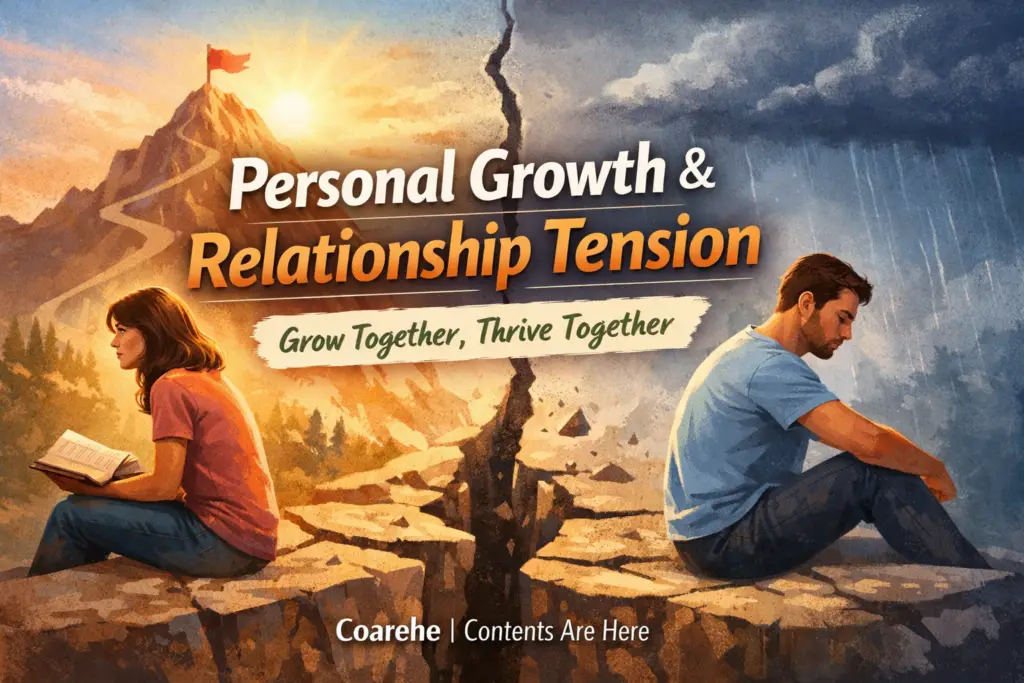
Home Personal Growth and Relationship Tension: The Surprising Truth and the Smart Way to Flourish Together Personal growth changes you. Relationships respond to change. When you evolve, your bond feels the shift. At first, that shift may feel exciting. However, it can also create tension. This tension does not mean failure. Instead, it signals transformation. Personal growth and relationship tension often walk side by side. Yet many people misunderstand this dynamic. They assume growth should only bring happiness. In reality, growth disrupts comfort. And comfort often holds relationships together. So the real question is clear. How do you grow without growing apart? Let’s explore the surprising truth. More importantly, let’s uncover the smart way to flourish together. Why Personal Growth Can Create Relationship Tension Growth changes habits. Growth reshapes values. Growth raises standards. As a result, your daily patterns shift. Meanwhile, your partner may remain the same. That gap can feel wide. For example, you may start reading daily. You may focus on fitness. You may set new career goals. However, your partner may prefer old routines. Suddenly, shared comfort fades. Consequently, tension rises. Personal growth and relationship tension often begin here. Not because someone is wrong. But because change creates uncertainty. And uncertainty can trigger fear. Fear then shows up as criticism. Or it appears as distance. Sometimes, it hides behind sarcasm. Other times, it looks like withdrawal. Still, the root issue remains simple. One person evolves faster than the other. The Hidden Fear Behind Relationship Strain Fear drives many reactions. However, people rarely admit it. When you grow, your partner may fear loss. They may fear you will outgrow them. They may fear you will judge them. Or worse, they may fear abandonment. Therefore, tension becomes protection. Resistance becomes defense. Criticism becomes a shield. Personal growth and relationship tension intensify when fear stays unspoken. Yet fear loses power when exposed. That is why open dialogue matters. However, many couples avoid hard talks. Instead, they argue about surface issues. Money becomes the topic. Time becomes the complaint. Small habits become battlegrounds. Meanwhile, the real issue hides underneath. Growth changes identity. Identity shifts can feel threatening. And relationships built on old identities may wobble. Still, wobbling does not mean breaking. It simply means rebuilding. Growth Is Not the Enemy of Love Many believe growth harms intimacy. That belief feels logical. After all, change can create distance. However, growth actually strengthens healthy bonds. It increases self-awareness. It improves emotional control. It builds confidence. And confidence supports secure attachment. Therefore, personal growth and relationship tension do not oppose each other. They reveal areas that need adjustment. Strong relationships adapt. Weak ones resist. The difference lies in mindset. If both partners value evolution, tension becomes temporary. If one clings to comfort, tension becomes chronic. So the goal is not to slow your growth. Instead, the goal is shared understanding. Signs Your Personal Growth Is Affecting Your Relationship Awareness brings clarity. Clarity prevents resentment. Look for these signals. First, conversations feel strained. Second, shared interests shrink. Third, subtle jealousy appears. Fourth, emotional distance grows. Fifth, support feels conditional. These signs do not predict disaster. However, they demand attention. Personal growth and relationship tension often escalate when ignored. Therefore, early action matters. Not later. Now. The Smart Way to Handle Personal Growth and Relationship Tension Growth requires courage. Relationships require skill. When both combine, wisdom becomes essential. Here is the smart way forward. 1. Communicate Growth, Not Superiority Share your journey humbly. Explain why change matters to you. However, avoid preaching. No one enjoys feeling judged. Use simple language. Speak from experience. For example, say, “I feel more focused when I wake early.” Avoid saying, “You should wake early too.” That difference changes everything. Personal growth and relationship tension ease when respect leads the way. 2. Invite, Do Not Pressure Invitation creates safety. Pressure creates resistance. Share books you enjoy. Suggest joint activities. However, accept a “no” calmly. Growth cannot be forced. Real change comes from desire. And desire grows in freedom. Therefore, protect your partner’s autonomy. Ironically, freedom often inspires curiosity. 3. Maintain Shared Rituals Growth adds new habits. Still, relationships need continuity. Keep shared meals. Keep weekly outings. Keep small traditions. These rituals anchor connection. Meanwhile, your personal growth expands identity. Balance both carefully. Personal growth and relationship tension reduce when connection remains stable. 4. Celebrate Small Progress Together Celebrate effort. Celebrate attempts. Celebrate curiosity. Even small steps matter. If your partner joins you at the gym once, acknowledge it. If they read one chapter, appreciate it. Positive reinforcement builds momentum. Criticism destroys it. Therefore, choose encouragement. Always. 5. Strengthen Emotional Intelligence Emotional intelligence protects love. It improves listening. It reduces defensiveness. It encourages empathy. Practice active listening. Reflect feelings back. Ask open questions. For example, ask, “How does this change make you feel?” Then pause. Listen fully. Do not interrupt. Personal growth and relationship tension soften when empathy increases. When Growth Reveals Deeper Incompatibility Not all tension resolves easily. Sometimes growth exposes misalignment. Values may differ sharply. Life goals may clash. Effort levels may vary. In such cases, honest reflection becomes vital. Ask yourself hard questions. Do we share long-term vision? Do we respect each other’s ambition? Do we support each other’s evolution? Growth clarifies truth. Truth may feel painful. However, clarity prevents long-term regret. Still, many couples rediscover alignment through dialogue. Therefore, never assume the worst too quickly. Work first. Reflect deeply. Then decide wisely. The Role of Self-Help in Relationship Stability Self-help strengthens individuals. Stronger individuals build stronger bonds. When you develop discipline, patience increases. When you improve focus, communication improves. When you heal trauma, triggers reduce. Therefore, personal development supports relationship health. However, balance remains crucial. Do not use self-help as a weapon. Do not label your partner as “unaware.” Instead, model growth quietly. Lead by example. Consistency persuades better than argument. How to Grow Together Intentionally Shared growth accelerates unity. Set mutual goals. Create shared vision boards. Read one book together monthly. Attend workshops together. Start a
When Willpower Fails, this Smart, Sustainable Strategy Fuels Real Growth

Home When Willpower Fails, this Smart, Sustainable Strategy Fuels Real Growth Many people trust willpower. They believe strong effort creates lasting change. However, willpower often fades. Energy drops. Stress rises. Life interrupts. As a result, motivation weakens. Consequently, goals collapse. This pattern frustrates even the most driven people. Yet failure does not mean weakness. Instead, it reveals a flawed approach. Because real personal growth demands more than raw effort. It requires a smart sustainable strategy. And that shift changes everything. Why Willpower Fails So Often Willpower feels powerful.However, it runs on limited energy.Each decision drains mental strength.Therefore, the more choices you make, the less control you feel.This concept explains decision fatigue.Moreover, stress accelerates that fatigue.Sleep loss worsens it.Emotional pressure compounds it.As a result, discipline disappears when you need it most.Importantly, this does not reflect your character.Rather, it reflects biology.Your brain protects energy.Consequently, it chooses comfort when resources run low.That is why strict diets fail.That is why extreme routines collapse.That is why motivation alone cannot sustain personal growth. The Shift: From Force to Strategy If willpower fails, what works instead?A smart sustainable strategy.This approach removes friction.It reduces decision stress.It builds systems.Most importantly, it creates real growth without burnout.Instead of forcing change, you design it.Instead of fighting habits, you replace them.Instead of relying on mood, you build structure.Therefore, progress continues even on hard days.And that consistency builds personal growth faster than bursts of effort. The Core of a Smart Sustainable Strategy A smart sustainable strategy rests on these three pillars: Clarity. Systems. Environment. Each pillar strengthens the others.Together, they fuel real growth.Let us break them down. Pillar One: Clear Direction Creates Power Clarity drives personal growth.Without it, effort scatters.With it, energy focuses.First, define one key goal.Not ten.One.Then break it into small steps.Small steps lower resistance.Moreover, small wins build momentum.Momentum fuels motivation.Therefore, clarity protects your energy.Additionally, clarity reduces stress.When you know what to do next, you act faster.That simple shift turns confusion into progress.And progress builds confidence. Pillar Two: Systems Beat Willpower Systems outperform motivation.Because systems operate automatically.For example, if you want to read daily, set a fixed time.Place the book on your desk.Remove distractions.Now reading requires less effort.Consequently, you read more often.This is not luck.It is structure.Similarly, if you want to exercise, prepare clothes at night.Reduce morning decisions.Lower friction.Therefore, action becomes easier.Over time, repetition forms habit.And habit supports real growth without constant struggle. Pillar Three: Environment Shapes Behavior Environment influences personal growth more than motivation. Your surroundings cue your actions. If junk food fills your kitchen, temptation grows.If healthy food fills your fridge, better choices follow.Likewise, if your phone stays beside your bed, distraction wins.However, if you charge it outside the room, focus improves.Therefore, change your environment before you change yourself.This strategy feels simple.Yet it proves powerful.Because behavior often follows design.Design wisely.Then watch real growth unfold. Why Sustainability Matters in Personal Growth Fast change excites people.However, fast change often fades.Sustainable progress lasts.It respects energy.It honors balance.Moreover, it prevents burnout.Burnout kills discipline.Burnout drains joy.Burnout halts personal growth.Therefore, choose steady improvement.Aim for one percent better each day.That small gain compounds.Weeks create momentum.Months create transformation.Years create mastery.Thus, sustainability fuels real growth far more effectively than intensity. The Role of Identity in Real Growth Strategy works best when identity shifts.Instead of saying, “I want to exercise,” say, “I am becoming healthy.”Instead of saying, “I want to write,” say, “I am a writer.”Identity anchors behavior.Because people act in line with who they believe they are.Therefore, align your habits with your desired identity.Each small action confirms it.Each repetition strengthens it.Consequently, discipline feels natural.And real growth becomes part of who you are. Replace Motivation With Momentum Motivation fluctuates.Momentum builds.Therefore, start small.Take action immediately.Do not wait for perfect timing.Action creates clarity.Clarity creates confidence.Confidence creates momentum.Then momentum reduces the need for willpower.This cycle supports personal growth long term.And that is the true goal. How to Build a Smart Sustainable Strategy Today Start simple.First, choose one priority.Second, break it into tiny steps.Third, schedule those steps.Fourth, adjust your environment.Finally, track progress weekly.Tracking increases awareness.Awareness sharpens focus.Focus strengthens execution.Therefore, results improve.Importantly, review and refine often.If something fails, adjust the system.Do not blame yourself.Systems solve problems better than guilt ever will. Common Mistakes That Block Real Growth Many people chase complexity.However, complexity kills consistency.Others chase speed.Yet speed without structure collapses.Some rely only on inspiration.But inspiration fades quickly.Instead, build structure.Simplify goals.Protect energy.Moreover, celebrate small progress.Small progress sustains motivation.That steady approach fuels lasting personal growth. The Psychology Behind Sustainable Success Behavior science confirms this truth.Habits form through repetition and reward.Therefore, attach rewards to new habits.Keep them simple.For example, enjoy music while exercising.Or drink your favorite tea while journaling.These positive links strengthen routines.Furthermore, reduce punishment language.Avoid harsh self-talk.Because growth thrives in supportive environments.Even internally.Consequently, kindness increases resilience.And resilience strengthens real growth. Personal Growth Without Burnout Burnout often hides behind ambition.However, ambition requires balance.Schedule rest.Protect sleep.Move your body.Eat nourishing food.Additionally, set boundaries.Say no when needed.Because energy fuels discipline.Without energy, strategy collapses.Therefore, guard your energy fiercely.Real growth demands sustainability.And sustainability demands care. Measuring Progress the Right Way Many measure only big results.However, small metrics matter more.Track consistency.Track effort.Track learning.Because growth unfolds gradually.Moreover, celebrate process wins.Did you show up?Did you improve slightly?That counts.Consequently, confidence rises.And confidence reinforces personal growth. Why This Strategy Builds Authority in Your Life A smart sustainable strategy creates reliability.Reliability builds trust.Trust builds influence.Therefore, your discipline inspires others.Your growth becomes visible.Over time, people seek your advice.Because consistent action proves credibility.And credibility establishes authority.Not only online.But in life.Thus, when willpower fails, strategy elevates you. The Compound Effect of Smart Choices Small habits compound.Daily reading builds knowledge.Daily saving builds wealth.Daily exercise builds strength.Individually, each action seems small.Collectively, they transform identity.Therefore, focus on repetition.Repetition shapes destiny.And destiny reflects daily choices.This truth underpins every personal growth journey. Your Next Step Toward Real Growth Now you understand the limits of willpower.More importantly, you see the power of strategy.Therefore, act today.Choose one area.Design one system.Improve one environment cue.Then repeat tomorrow.Consistency beats intensity.Structure beats emotion.Strategy beats willpower.When willpower fails, this smart sustainable strategy fuels real growth.And real growth builds a better life.Step by step.Choice
Goals vs. Intentions: A Game-Changing Perspective for Limitless Self-Growth
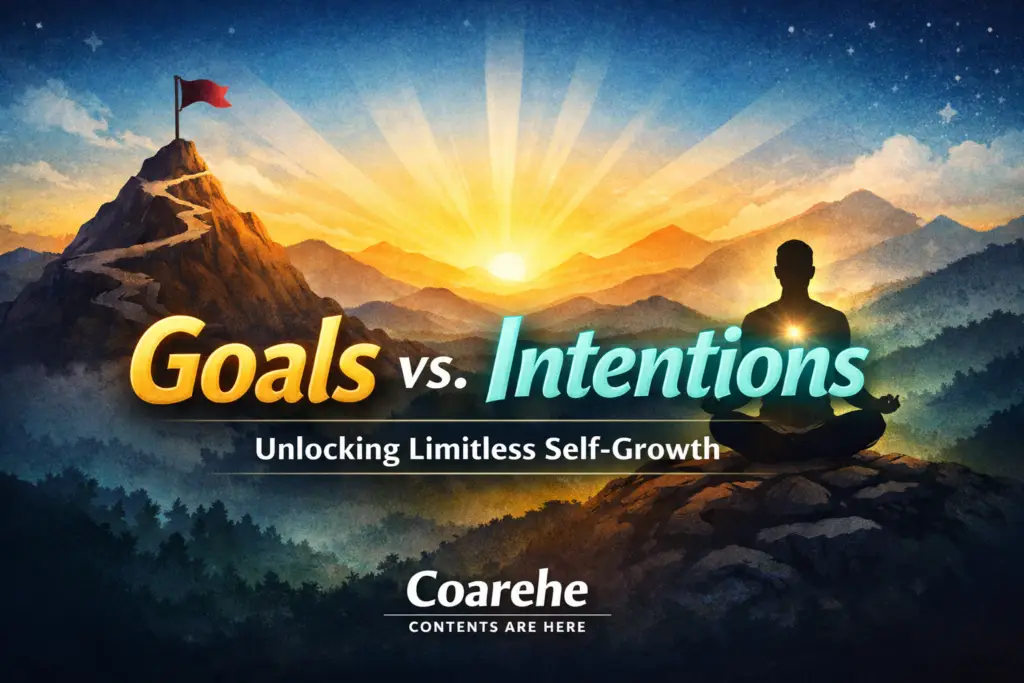
Home Goals vs. Intentions: A Game-Changing Perspective for Limitless Self-Growth Personal growth begins with clarity. Yet many people confuse goals with intentions. At first glance, they seem similar. However, the difference between them can reshape your entire self-improvement journey. Some people chase goals with fierce intensity. Meanwhile, others live by deep intentions that guide daily action. Both approaches matter. However, one creates sustainable, limitless self-growth when used correctly. So let us explore the truth behind goals vs intentions. Because when you understand this distinction, you unlock a new level of personal development. Understanding Goals in Personal Development Goals give direction. They define outcomes you want to achieve. For example, you may set a goal to lose ten kilograms. Or you may aim to earn a specific income this year. Goals focus on results. They answer the question, “What do I want?” Therefore, goals create structure. They also help you measure progress. Moreover, they push you to stretch beyond comfort zones. High achievers often rely on clear goals. Athletes train for medals. Entrepreneurs build toward revenue targets. Students aim for top grades. In each case, the goal sharpens focus. However, goals alone do not guarantee growth. Because while goals define destinations, they do not always define identity. And identity drives long-term transformation. The Power of Intentions Intentions operate at a deeper level. They shape how you show up each day. Instead of asking, “What do I want?” intentions ask, “Who am I becoming?” That shift changes everything. For instance, instead of setting a goal to read twenty books, you hold the intention to become a lifelong learner. Instead of aiming to make more money, you commit to becoming financially disciplined. Therefore, intentions guide behavior consistently. They anchor actions in values. Furthermore, they influence decisions even when no one watches. Intentions build character. And character sustains success. While goals chase outcomes, intentions cultivate identity. That distinction fuels limitless self-growth. Goals vs Intentions: The Core Difference Goals measure achievement. Intentions shape alignment. Goals focus on future results. Intentions influence present behavior. As a result, goals can feel external. In contrast, intentions feel internal. You may achieve a goal and still feel empty. However, living with intention creates fulfillment along the journey. Moreover, goals can expire. Once achieved, they lose urgency. Yet intentions evolve and deepen over time. Therefore, intentions sustain growth beyond milestones. Nevertheless, this does not mean goals lack value. Instead, it means goals need intention to remain meaningful. When you combine both, you create unstoppable momentum. Why Goals Sometimes Fail Many people abandon their goals. They start strong in January. However, motivation fades by March. Why does this happen? Often, the goal lacks emotional connection. It may sound impressive. Yet it does not align with identity. For example, someone sets a goal to exercise daily. However, they still see themselves as “not athletic.” That internal conflict weakens discipline. Consequently, consistency drops. Furthermore, goals often rely on willpower alone. Willpower, however, fluctuates. Stress reduces it. Fatigue drains it. Distractions overwhelm it. Therefore, goals without deeper intention struggle to survive pressure. Why Intentions Create Sustainable Growth Intentions transform from the inside out. They shape daily choices. They influence how you respond to setbacks. Instead of quitting after failure, you adjust. Because your intention remains intact. For instance, if your intention is to become resilient, every challenge becomes training. Setbacks no longer define you. They refine you. Moreover, intentions reduce self-sabotage. When identity aligns with action, resistance weakens. You no longer force growth. You embody it. Therefore, progress feels natural. Additionally, intentions foster intrinsic motivation. You act because it reflects who you are becoming. Not because you fear missing a target. That subtle shift increases long-term commitment. The Psychology Behind Identity-Based Growth Modern psychology supports identity-driven change. Behavior flows from self-image. If you believe you are disciplined, you act accordingly. However, if you label yourself inconsistent, you reinforce that pattern. Therefore, intentions reshape self-perception. They create new internal narratives. Instead of saying, “I am trying to be productive,” you declare, “I am becoming focused and disciplined.” Language influences belief. Belief influences behavior. Behavior creates results. Consequently, identity fuels achievement. This is why the goals vs intentions conversation matters deeply in personal development. Because lasting growth begins within. How to Combine Goals and Intentions for Limitless Self-Growth The smartest strategy blends both. First, define a clear goal. Clarity sharpens direction. Next, attach a powerful intention. Intention strengthens identity. For example, set a goal to save a specific amount this year. Then adopt the intention to become financially wise and responsible. Now your daily spending choices align naturally. Similarly, set a goal to improve fitness. Then hold the intention to become strong, energetic, and disciplined. Suddenly, workouts feel purposeful. Therefore, intention fuels the process. Meanwhile, goals measure the outcome. Together, they create balance. Practical Framework: The Growth Alignment Method You can apply a simple three-step method. 1. Define the result you want. Be specific and measurable. 2. Identify the person you must become to achieve it. Describe that identity clearly. 3. Design daily habits that reflect that identity. Habits bridge intention and achievement. For instance, if your goal is to build a business, your intention may be to become consistent and strategic. Therefore, you schedule focused work sessions daily. Over time, small actions compound. Moreover, momentum builds confidence. Confidence reinforces identity. That loop accelerates self-growth dramatically. The Emotional Advantage of Intentional Living Intentions reduce anxiety. They shift focus from pressure to purpose. Instead of obsessing over distant results, you engage fully today. That presence increases satisfaction. Furthermore, intentional living strengthens self-trust. You keep promises aligned with values. Therefore, integrity grows. When integrity grows, confidence expands. Consequently, you approach challenges with calm determination. Additionally, intentions protect mental wellness. Because growth becomes meaningful rather than frantic. That emotional stability enhances overall personal development. Common Myths About Goals vs Intentions Some people believe intentions lack structure. However, strong intentions demand clarity. They require conscious commitment. Others think goals alone guarantee success. Yet statistics show most goals fail without
Mental Wellness and Personal Growth: The Inspiring Connection That Fuels a Better Life

Home Mental Wellness and Personal Growth: The Inspiring Connection That Fuels a Better Life Mental wellness and personal growth often get discussed separately.However, in real life, they move together. When one improves, the other follows.When one suffers, progress slows. This connection explains why growth sometimes feels blocked.It also explains why real change feels lighter once mental clarity improves. Understanding this relationship changes how you approach self-help.More importantly, it changes results. Why Mental Wellness Is the Foundation of Growth Mental wellness shapes how you think, decide, and respond.Without it, growth becomes exhausting. A calm mind processes challenges better.A balanced mind learns faster. Because of that, mental wellness supports every personal development effort.It strengthens focus, patience, and resilience. Instead of forcing growth, you begin to support it.That shift matters. Defining Mental Wellness Beyond the Basics Mental wellness does not mean constant happiness.It means emotional balance and psychological flexibility. You still feel stress.You still face pressure. However, you respond instead of react.You recover faster. This ability creates space for learning.And learning fuels growth. What Personal Growth Really Depends On Personal growth depends on clarity.Clarity depends on mental health. When your thoughts feel scattered, decisions suffer.When emotions overwhelm, consistency breaks. Mental wellness stabilizes the inner environment.Growth then becomes sustainable. Therefore, progress feels steady instead of chaotic.And confidence builds naturally. The Mindset Bridge Between Wellness and Growth Mindset connects wellness and growth.It filters experience. A healthy mindset sees challenges as feedback.An unhealthy one sees threats everywhere. Mental wellness supports adaptive thinking.That thinking encourages learning. As a result, setbacks turn into lessons.Momentum continues. Emotional Regulation: The Silent Accelerator Emotional regulation speeds growth.Without it, effort leaks. Strong emotions cloud judgment.Balanced emotions sharpen it. When you regulate emotions, habits stabilize.Goals feel reachable. This skill improves self-trust.And self-trust amplifies progress. Stress Management Shapes Long-Term Success Stress will not disappear.However, your response can improve. Chronic stress drains focus.It also reduces motivation. Mental wellness teaches stress management.That skill protects energy. Once stress decreases, creativity rises.Growth accelerates. Self-Awareness Is the Shared Core Both mental wellness and personal growth rely on self-awareness.Without awareness, change stays shallow. Self-awareness reveals patterns.Patterns reveal leverage points. Once you see clearly, you act intentionally.Results follow. The Role of Thought Patterns Thoughts shape emotions.Emotions shape actions. Negative loops sabotage growth.Healthy loops support it. Mental wellness interrupts harmful patterns.Growth replaces them with constructive ones. Over time, identity shifts.Behavior follows. Why Inner Stability Improves Discipline Discipline does not come from pressure.It comes from inner stability. A stable mind resists distraction.It also recovers faster after failure. Mental wellness reduces internal conflict.Discipline then feels natural. Consistency becomes easier.Results compound. Confidence Grows From Psychological Safety Confidence thrives in safety.Fear suffocates it. Mental wellness creates internal safety.That safety encourages experimentation. You try new behaviors.You learn faster. Personal growth expands through action.Confidence reinforces itself. Mental Wellness Strengthens Purpose Purpose requires clarity.Clarity requires mental calm. When anxiety dominates, purpose fades.When balance returns, direction sharpens. Mental wellness reconnects you to meaning.Growth gains depth. Life stops feeling random.Choices align. Relationships Improve With Inner Balance Growth rarely happens in isolation.Relationships matter. Mental wellness improves communication.It reduces defensiveness. As relationships improve, support increases.Growth accelerates. Healthy connections amplify development.Isolation slows it. Burnout Blocks Growth Completely Burnout kills momentum.It drains motivation. Mental wellness prevents burnout.It restores boundaries. With boundaries in place, energy returns.Growth resumes. This balance protects long-term progress.Short-term pressure loses power. Habits Thrive in a Healthy Mental Environment Habits struggle in chaos.They thrive in stability. Mental wellness creates consistency.Consistency builds habits. Habits then reinforce wellness.The cycle strengthens. Growth becomes automatic.Effort decreases. Why Healing and Growth Are Not Opposites Healing supports growth.Growth supports healing. Ignoring pain delays progress.Addressing it unlocks movement. Mental wellness acknowledges struggles.Personal growth transforms them. Both processes work together.Neither replaces the other. The Compounding Effect of Inner Work Inner work compounds quietly.Results appear gradually. Mental wellness improves daily decisions.Daily decisions shape outcomes. Over time, small improvements stack.Life quality rises. Growth stops feeling dramatic.It becomes stable. The Coarehe Approach to Wellness and Growth At Coarehe, we view mental wellness as the engine of growth.Not an optional add-on. We emphasize clarity before action.Alignment before intensity. Because sustainable progress requires balance.Not burnout. Practical Integration: Turning Insight Into Action Understanding matters.Application changes lives. Start with reflection.Then adjust habits gently. Support mental wellness daily.Growth follows naturally. Consistency beats perfection.Always. Why This Connection Fuels a Better Life Mental wellness strengthens resilience.Personal growth expands capability. Together, they create fulfillment.Not just success. Life feels intentional.Progress feels earned. This connection fuels balance, meaning, and momentum.And that combination builds a better life. Final Reflection: Growth Begins Within A better life does not start with pressure.It starts with care. When mental wellness leads, growth lasts.When growth aligns, life improves. The inspiring truth remains simple.Heal the mind.Grow the self.Live better. Share this Content: Leave a reply Cancel reply Logged in as coarehe. Edit your profile. Log out? Required fields are marked * Mental WellnessMindfulness Mental Wellness and Personal Growth: The Inspiring Connection That Fuels a Better Life coareheFebruary 10, 2026Edit Home Mental Wellness and Personal Growth: The Inspiring Connection That Fuels a Better Life Mental wellness and personal growth often… Read More Personal Growth What Personal Development Truly Is—and Why Understanding It Changes Everything coareheFebruary 10, 2026Edit Home What Personal Development Truly Is—and Why Understanding It Changes Everything Personal development is everywhere.It fills bookshelves, podcasts, social feeds,… Read More
What Personal Development Truly Is—and Why Understanding It Changes Everything
Home What Personal Development Truly Is—and Why Understanding It Changes Everything Personal development is everywhere.It fills bookshelves, podcasts, social feeds, and seminars. Yet despite all this noise, many people still feel stuck.They consume advice, but their lives stay the same. That disconnect is not accidental.Most people misunderstand what personal development truly is. More importantly, they chase outcomes instead of transformation.And because of that, they miss the real power entirely. This article clears the confusion.It explains what personal development actually means, why most approaches fail, and how understanding it correctly changes everything—your habits, your mindset, and your future. What Personal Development Is Not (Despite What You’ve Been Told) Before defining personal development, we must strip away the myths. Otherwise, clarity never lands. Personal development is not motivation.Motivation fades quickly. It is not positive thinking alone.Optimism without action creates delusion. It is not copying successful people word for word.Their context is not your life. It is not hustle culture disguised as growth.Burnout is not progress. Most importantly, personal development is not about becoming someone else.That belief quietly destroys confidence. Instead, real growth begins elsewhere. The Real Definition of Personal Development Personal development is the intentional process of understanding, strengthening, and aligning your inner world with the life you want to live. That definition matters.It changes the direction completely. Personal development works from the inside out, not the other way around.It starts with awareness, not achievement. It focuses on identity before habits.It prioritizes clarity before speed. As a result, progress becomes sustainable.And growth stops feeling forced. Why Most People Get Personal Development Wrong Most people treat personal development like a checklist.Read a book.Watch a video.Attend a seminar. However, information alone does not equal transformation.Knowledge without integration stays unused. Additionally, many chase surface-level change.They want better results without deeper understanding. They try to fix habits without addressing beliefs.They seek discipline without resolving resistance. Because of that, effort increases while results stay limited.Frustration follows naturally. Understanding changes everything here. Awareness Is the First True Skill Real personal development begins with awareness.Not goals.Not routines. Awareness reveals patterns.It exposes triggers, reactions, and unconscious habits. Once you see clearly, choice appears.Before awareness, behavior runs on autopilot. This is why self-observation matters.It turns reactions into responses. Over time, awareness builds emotional intelligence.And emotional intelligence fuels every form of success. Identity Shapes Every Outcome You Experience You do not rise to the level of your goals.You fall to the level of your identity. Identity answers silent questions: Who am I? What do I deserve? What is possible for me? If your identity feels small, your actions shrink.If your identity feels capable, courage grows. Therefore, personal development reshapes identity first.Habits follow naturally. This shift alone explains why some people change permanently while others relapse repeatedly. Growth Requires Alignment, Not Force Force works temporarily.Alignment works consistently. When your values, beliefs, and actions align, progress feels natural.Resistance decreases. However, when alignment breaks, discipline feels exhausting.Eventually, willpower collapses. Personal development teaches alignment.It helps you understand what truly matters to you. From there, decisions simplify.Energy returns. Emotional Mastery Is Not Optional Emotions drive behavior.Ignoring them weakens growth. Personal development does not eliminate emotions.It teaches regulation and understanding. When emotions lead unchecked, impulsive decisions follow.When emotions get understood, clarity emerges. This skill improves relationships.It improves leadership.It improves self-respect. And yes, it improves mental health without pretending pain does not exist. Personal Responsibility Changes the Game Blame keeps people stuck.Responsibility moves them forward. Personal development encourages responsibility without shame.That distinction matters. You learn to say:“This happened. What can I learn?”Instead of:“This happened. Why me?” Responsibility restores agency.Agency restores confidence. Over time, confidence compounds. Why Growth Feels Uncomfortable—and Why That’s Good Growth stretches identity.And stretching never feels comfortable. Discomfort signals expansion, not failure.Avoiding discomfort guarantees stagnation. Personal development reframes discomfort as feedback.Not as a stop sign. When you expect discomfort, fear loses power.Progress continues. The Role of Consistency Over Intensity Intensity excites.Consistency transforms. Small daily improvements beat massive occasional effort.Every single time. Personal development favors systems over bursts.It rewards patience. This approach builds momentum.And momentum builds belief. External Success Reflects Internal Order Your outer life mirrors your inner structure.Chaos inside creates chaos outside. Once internal clarity forms, external progress accelerates.Opportunities appear clearer. This explains why inner work unlocks outer success.It is not mystical.It is practical. Why Personal Development Is a Lifelong Practice There is no final version of you.Growth evolves with life stages. What worked before may not work later.And that is normal. Personal development adapts with you.It deepens self-trust. Eventually, you stop chasing transformation.You start embodying it. The Quiet Power of Self-Trust Self-trust ends dependence on external validation.That shift changes everything. You listen inward more clearly.You choose intentionally. Personal development strengthens this trust through reflection and action.Each kept promise builds confidence. Confidence, then, becomes grounded—not loud. Why Understanding Personal Development Changes Everything Understanding personal development changes how you: Learn Fail Decide Relate Recover It turns mistakes into data.It turns fear into information. Life stops feeling random.Patterns make sense. Most importantly, you stop outsourcing your growth.Ownership returns. Personal Development Is Not Selfish—It’s Foundational When you grow, others benefit.Your clarity helps relationships. Your emotional regulation reduces conflict.Your boundaries model respect. Growth spreads quietly. The Coarehe Perspective on Personal Development At Coarehe, personal development means practical self-awareness applied consistently over time. No hype.No shortcuts. Just real tools, honest reflection, and steady progress. Because growth should feel empowering, not overwhelming. Final Thought: Growth Begins With Understanding Personal development does not begin with action.It begins with understanding. Once understanding settles, action follows naturally.Momentum builds. And slowly, quietly, everything changes. Not because you became someone else.But because you finally became aligned with who you already are. Share this Content: Leave a reply Cancel reply Logged in as coarehe. Edit your profile. Log out? Required fields are marked *