
Self-Awareness: The Life-Changing Skill That Powers Every Successful Life

Home Self-Awareness: The Life-Changing Skill That Powers Every Successful Life Many people chase success through external tools. They read books, follow strategies, and adopt new habits. Yet a deeper skill often determines whether those tools actually work. That skill is self-awareness. Self-awareness shapes how you think, decide, and grow. Because of this, it influences every result you experience in life. However, most people overlook it. They focus on productivity before understanding themselves. They chase goals before understanding their motivations. As a result, progress often feels confusing. Fortunately, developing self-awareness changes everything. Once you understand how your mind works, you gain the power to shape your life intentionally. What Self-Awareness Really Means Many people misunderstand self-awareness. Some assume it means overthinking. Others believe it requires constant self-analysis. However, true self-awareness is simpler. Self-awareness means clearly understanding your thoughts, emotions, behaviors, and motivations. You notice how you react to situations. You also recognize the patterns behind those reactions. Because of this clarity, you make better decisions. Instead of acting on impulse, you respond with intention. This ability becomes the foundation of personal growth. Why Self-Awareness Powers Every Successful Life Success rarely happens by accident. Instead, successful individuals understand themselves deeply. They know their strengths. They also recognize their weaknesses. Therefore, they make smarter choices. For example, they choose careers that match their abilities. They also build habits that support their natural strengths. At the same time, they manage their limitations. Because of this awareness, they improve faster. Self-awareness removes guesswork. It also strengthens personal direction. As a result, success becomes more intentional. The Link Between Self-Awareness and Personal Growth Personal growth requires change. However, meaningful change begins with understanding. This is where self-awareness becomes powerful. When you observe your thoughts and actions, you start to notice patterns. Some patterns support success. Others create hidden obstacles. For instance, you may notice procrastination before important tasks. You might also recognize emotional reactions that slow progress. Once you see these patterns clearly, you can change them. Therefore, self-awareness becomes the first step toward real improvement. Internal Self-Awareness vs External Self-Awareness Psychologists often describe two forms of self-awareness. The first type is internal self-awareness. This involves understanding your values, beliefs, and motivations. You recognize what truly drives your behavior. Because of this insight, your decisions become clearer. The second type is external self-awareness. This means understanding how others perceive you. You become aware of how your words, actions, and attitude affect people around you. When both forms develop together, relationships improve. Additionally, leadership skills grow stronger. How Self-Awareness Improves Decision Making Every day, people make hundreds of decisions. Some choices shape careers, finances, and relationships. Without self-awareness, these decisions often rely on emotion or habit. However, self-aware individuals pause before reacting. They ask deeper questions. Why do I want this outcome? What emotions influence my thinking? What result will truly benefit me long term? Because of this reflection, decisions become wiser. Over time, better decisions create better results. The Role of Self-Awareness in Emotional Intelligence Emotions influence behavior more than most people realize. However, many individuals struggle to manage emotions effectively. This challenge often comes from low self-awareness. When you understand your emotional triggers, you gain control over them. For example, you may notice frustration rising during conflict. Instead of reacting immediately, you pause. Then you respond calmly. This ability strengthens emotional intelligence. As a result, relationships become healthier and more productive. Self-Awareness and Confidence Many people believe confidence comes from success. However, real confidence often begins with self-awareness. When you understand your strengths, you trust your abilities. You also recognize areas where growth is needed. This balanced perspective creates stable confidence. You no longer depend on constant approval. Instead, your confidence grows from self-understanding. Because of this, challenges feel less threatening. You trust your ability to learn and improve. Why Lack of Self-Awareness Creates Hidden Problems A lack of self-awareness creates many invisible obstacles. First, people repeat the same mistakes. They fail to notice the habits that cause problems. Second, relationships suffer. Without awareness, individuals misunderstand how their behavior affects others. Finally, personal growth slows. If you cannot identify weaknesses, improvement becomes difficult. Because of these reasons, many talented individuals struggle. Their skills remain strong, yet their awareness stays limited. Therefore, progress stalls. Practical Ways to Build Self-Awareness Fortunately, self-awareness can grow through simple practices. Small habits often produce powerful results. 1. Practice Daily Reflection Spend a few minutes reviewing your day. Ask what went well. Also ask what could improve. This habit builds awareness gradually. Over time, patterns become clear. 2. Pay Attention to Emotional Triggers Notice situations that create strong emotions. Anger, frustration, or anxiety often reveal deeper beliefs. Understanding these triggers improves emotional control. 3. Ask for Honest Feedback Other people often see behaviors we miss. Therefore, ask trusted friends or colleagues for feedback. Listen carefully without defensiveness. This insight strengthens external self-awareness. 4. Observe Your Habits Habits shape most daily actions. However, many habits operate automatically. Pause occasionally to observe them. Identify which habits support growth and which one’s limit progress. 5. Write Your Thoughts Journaling helps organize thinking. When you write thoughts clearly, hidden beliefs often appear. This clarity deepens understanding. How Self-Awareness Strengthens Leadership Great leaders often share one powerful trait. They understand themselves deeply. Because of strong self-awareness, they manage emotions effectively. They also understand how their actions influence others. As a result, they build trust. Self-aware leaders also accept feedback easily. They adjust strategies when needed. This flexibility strengthens teams and organizations. Therefore, leadership and self-awareness often grow together. Self-Awareness and Purpose Many people search for purpose in life. However, purpose rarely appears suddenly. Instead, it grows through self-awareness. When you understand your values, interests, and strengths, direction becomes clearer. You begin to notice activities that feel meaningful. At the same time, you recognize work that drains energy. This knowledge helps guide life choices. Gradually, purpose begins to form. The Daily Habit That Expands Self-Awareness Growth does not require dramatic change. Instead, small daily habits build
Fixed vs Growth Mindset? Find Out the Subtle Mental Shift That Unlocks Your Best Self
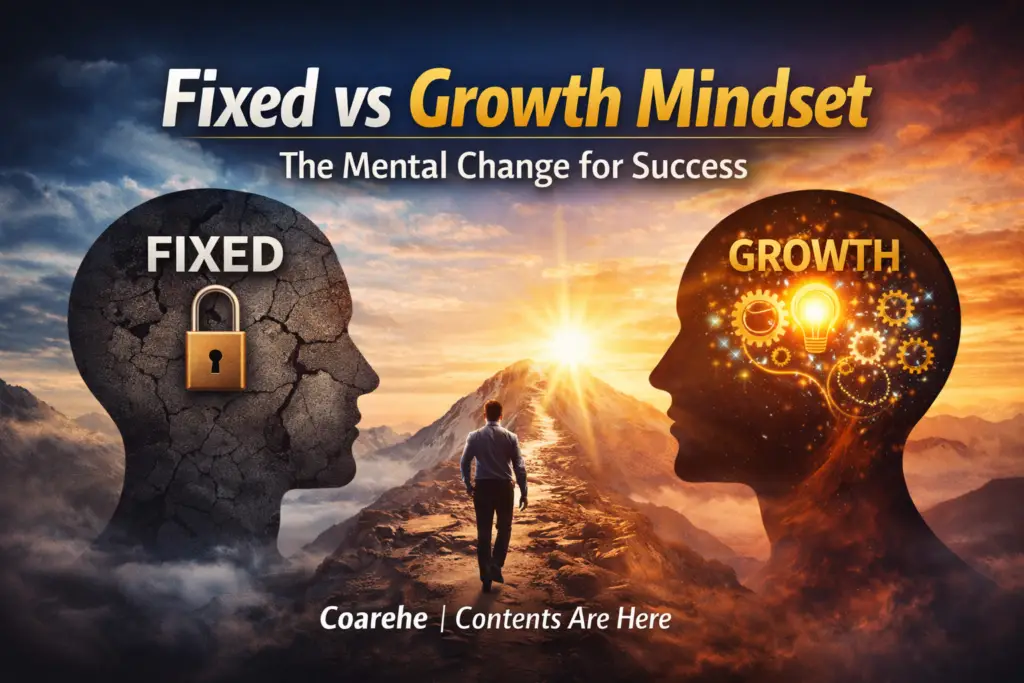
Home Fixed vs Growth Mindset? Find Out the Subtle Mental Shift That Unlocks Your Best Self Success rarely starts with talent. Instead, it begins with how you think about talent. Many people search for better habits, stronger motivation, or smarter strategies. However, the true breakthrough often begins deeper in the mind. This is where the concept of fixed vs growth mindset becomes powerful. Your mindset shapes how you handle failure, learning, and progress. As a result, it influences nearly every area of life. Careers rise or fall on this silent belief system. Relationships improve or weaken because of it. Even personal confidence grows or shrinks under its influence. Therefore, understanding the difference between a fixed mindset and a growth mindset can transform how you approach your life. More importantly, the shift between the two is often subtle. Yet that small shift can unlock your best self. Understanding Fixed vs Growth Mindset Before we explore transformation, we must first understand the core idea behind fixed vs growth mindset. A fixed mindset believes abilities remain static. People with this mindset think intelligence, creativity, and talent stay mostly the same throughout life. Because of that belief, they often avoid challenges. They fear mistakes. Failure feels like proof of weakness. As a result, they prefer safe situations where success seems guaranteed. However, this approach creates hidden limits. A growth mindset operates differently. It treats ability as something that can expand through learning, practice, and persistence. Challenges become opportunities. Effort becomes valuable. Mistakes become feedback rather than failure. Consequently, people with a growth mindset improve faster and achieve more over time. The difference between these two ways of thinking appears small. Yet the results can reshape an entire life. Why the Fixed Mindset Feels Comfortable but Limits Growth Many people fall into a fixed mindset without realizing it. First, society often rewards quick success. People celebrate natural talent more than consistent effort. Because of this, many individuals begin to fear situations where they might struggle. Next, fixed thinking protects the ego. If someone believes ability cannot change, then failure does not require growth. Instead, they can simply avoid difficult situations. While that feels safe, it creates long-term problems. Avoiding challenges stops learning. Over time, skills stagnate. Confidence becomes fragile because success must always feel easy. Therefore, a fixed mindset quietly limits potential. Meanwhile, the world continues to reward those who adapt and grow. The Power of a Growth Mindset in Personal Development A growth mindset changes how people interpret difficulty. Instead of asking, “Am I good at this?” growth thinkers ask, “How can I improve at this?” That small change reshapes behavior. People with a growth mindset practice longer. They learn from mistakes. They seek feedback and adjust their approach. As a result, progress accelerates. This pattern appears across many fields. Entrepreneurs refine ideas through trial and error. Athletes improve through repeated training. Creators sharpen skills through constant experimentation. The principle stays the same. Growth happens when effort meets learning. Because of this, a growth mindset becomes the foundation of strong personal development. The Subtle Mental Shift That Changes Everything The difference between fixed vs growth mindset often comes down to a single belief. Do you see ability as a limit, or do you see it as a starting point? This subtle mental shift transforms how people interpret life events. For example, imagine someone struggling with a new skill. A fixed mindset might say: “I am not naturally good at this.” A growth mindset responds differently: “I am not good at this yet.” The word yet changes everything. It keeps the door open to improvement. It also creates psychological momentum. Because once people believe progress is possible, they begin to act differently. And actions create results. How Fixed vs Growth Mindset Shapes Everyday Decisions Mindset does not only appear during big life moments. Instead, it shows up in small daily decisions. Consider learning a new skill. A fixed mindset may stop after early difficulty. Meanwhile, a growth mindset continues practicing. Think about receiving criticism. A fixed mindset hears rejection. However, a growth mindset hears guidance. Even goal setting changes. People with fixed beliefs often set goals that protect their image. In contrast, growth-oriented individuals set goals that challenge their limits. Over time, these small decisions compound. Eventually, they build two completely different life paths. Signs You Might Be Stuck in a Fixed Mindset Many people carry fixed thinking habits without awareness. However, certain patterns often reveal the mindset. First, you may avoid challenges that risk failure. Next, criticism may feel deeply personal. You might also compare your ability to others often. Finally, mistakes may cause discouragement rather than curiosity. These patterns do not mean something is wrong. Instead, they signal an opportunity to grow. Awareness always becomes the first step toward change. Practical Ways to Build a Growth Mindset The transition from fixed vs growth mindset does not require dramatic life changes. Instead, it begins with simple mental habits. 1. Reframe Challenges View challenges as training opportunities. Athletes grow stronger through resistance. Likewise, the mind grows through difficulty. Therefore, when something feels hard, treat it as a signal for growth. 2. Replace Judgment with Curiosity Instead of judging mistakes, analyze them. Ask what went wrong. Then adjust your strategy. Curiosity fuels learning. Judgment blocks it. 3. Focus on Progress Perfection slows growth. Instead, track improvement. Small gains accumulate over time. As progress becomes visible, motivation rises naturally. 4. Embrace the Power of “Yet” Language shapes belief. When something feels impossible, add the word yet to the sentence. This simple habit keeps the growth door open. 5. Surround Yourself with Growth Thinkers Environment influences mindset. Spend time with people who value learning, effort, and improvement. Their perspective strengthens your own. Why the Growth Mindset Creates Long-Term Success Success rarely arrives instantly. Instead, it grows through repeated improvement. A growth mindset supports this process because it encourages persistence. When setbacks appear, growth thinkers adapt rather than quit. They refine strategies. They learn new skills. They continue
What Personal Development Truly Is—and Why Understanding It Changes Everything

Home What Personal Development Truly Is—and Why Understanding It Changes Everything Personal development is everywhere.It fills bookshelves, podcasts, social feeds, and seminars. Yet despite all this noise, many people still feel stuck.They consume advice, but their lives stay the same. That disconnect is not accidental.Most people misunderstand what personal development truly is. More importantly, they chase outcomes instead of transformation.And because of that, they miss the real power entirely. This article clears the confusion.It explains what personal development actually means, why most approaches fail, and how understanding it correctly changes everything—your habits, your mindset, and your future. What Personal Development Is Not (Despite What You’ve Been Told) Before defining personal development, we must strip away the myths. Otherwise, clarity never lands. Personal development is not motivation.Motivation fades quickly. It is not positive thinking alone.Optimism without action creates delusion. It is not copying successful people word for word.Their context is not your life. It is not hustle culture disguised as growth.Burnout is not progress. Most importantly, personal development is not about becoming someone else.That belief quietly destroys confidence. Instead, real growth begins elsewhere. The Real Definition of Personal Development Personal development is the intentional process of understanding, strengthening, and aligning your inner world with the life you want to live. That definition matters.It changes the direction completely. Personal development works from the inside out, not the other way around.It starts with awareness, not achievement. It focuses on identity before habits.It prioritizes clarity before speed. As a result, progress becomes sustainable.And growth stops feeling forced. Why Most People Get Personal Development Wrong Most people treat personal development like a checklist.Read a book.Watch a video.Attend a seminar. However, information alone does not equal transformation.Knowledge without integration stays unused. Additionally, many chase surface-level change.They want better results without deeper understanding. They try to fix habits without addressing beliefs.They seek discipline without resolving resistance. Because of that, effort increases while results stay limited.Frustration follows naturally. Understanding changes everything here. Awareness Is the First True Skill Real personal development begins with awareness.Not goals.Not routines. Awareness reveals patterns.It exposes triggers, reactions, and unconscious habits. Once you see clearly, choice appears.Before awareness, behavior runs on autopilot. This is why self-observation matters.It turns reactions into responses. Over time, awareness builds emotional intelligence.And emotional intelligence fuels every form of success. Identity Shapes Every Outcome You Experience You do not rise to the level of your goals.You fall to the level of your identity. Identity answers silent questions: Who am I? What do I deserve? What is possible for me? If your identity feels small, your actions shrink.If your identity feels capable, courage grows. Therefore, personal development reshapes identity first.Habits follow naturally. This shift alone explains why some people change permanently while others relapse repeatedly. Growth Requires Alignment, Not Force Force works temporarily.Alignment works consistently. When your values, beliefs, and actions align, progress feels natural.Resistance decreases. However, when alignment breaks, discipline feels exhausting.Eventually, willpower collapses. Personal development teaches alignment.It helps you understand what truly matters to you. From there, decisions simplify.Energy returns. Emotional Mastery Is Not Optional Emotions drive behavior.Ignoring them weakens growth. Personal development does not eliminate emotions.It teaches regulation and understanding. When emotions lead unchecked, impulsive decisions follow.When emotions get understood, clarity emerges. This skill improves relationships.It improves leadership.It improves self-respect. And yes, it improves mental health without pretending pain does not exist. Personal Responsibility Changes the Game Blame keeps people stuck.Responsibility moves them forward. Personal development encourages responsibility without shame.That distinction matters. You learn to say:“This happened. What can I learn?”Instead of:“This happened. Why me?” Responsibility restores agency.Agency restores confidence. Over time, confidence compounds. Why Growth Feels Uncomfortable—and Why That’s Good Growth stretches identity.And stretching never feels comfortable. Discomfort signals expansion, not failure.Avoiding discomfort guarantees stagnation. Personal development reframes discomfort as feedback.Not as a stop sign. When you expect discomfort, fear loses power.Progress continues. The Role of Consistency Over Intensity Intensity excites.Consistency transforms. Small daily improvements beat massive occasional effort.Every single time. Personal development favors systems over bursts.It rewards patience. This approach builds momentum.And momentum builds belief. External Success Reflects Internal Order Your outer life mirrors your inner structure.Chaos inside creates chaos outside. Once internal clarity forms, external progress accelerates.Opportunities appear clearer. This explains why inner work unlocks outer success.It is not mystical.It is practical. Why Personal Development Is a Lifelong Practice There is no final version of you.Growth evolves with life stages. What worked before may not work later.And that is normal. Personal development adapts with you.It deepens self-trust. Eventually, you stop chasing transformation.You start embodying it. The Quiet Power of Self-Trust Self-trust ends dependence on external validation.That shift changes everything. You listen inward more clearly.You choose intentionally. Personal development strengthens this trust through reflection and action.Each kept promise builds confidence. Confidence, then, becomes grounded—not loud. Why Understanding Personal Development Changes Everything Understanding personal development changes how you: Learn Fail Decide Relate Recover It turns mistakes into data.It turns fear into information. Life stops feeling random.Patterns make sense. Most importantly, you stop outsourcing your growth.Ownership returns. Personal Development Is Not Selfish—It’s Foundational When you grow, others benefit.Your clarity helps relationships. Your emotional regulation reduces conflict.Your boundaries model respect. Growth spreads quietly. The Coarehe Perspective on Personal Development At Coarehe, personal development means practical self-awareness applied consistently over time. No hype.No shortcuts. Just real tools, honest reflection, and steady progress. Because growth should feel empowering, not overwhelming. Final Thought: Growth Begins With Understanding Personal development does not begin with action.It begins with understanding. Once understanding settles, action follows naturally.Momentum builds. And slowly, quietly, everything changes. Not because you became someone else.But because you finally became aligned with who you already are. Share this Content: Leave a reply Cancel reply Logged in as coarehe. Edit your profile. Log out? Required fields are marked *